
How to Build a Unique Home in the Land of Copy&Paste Estates.
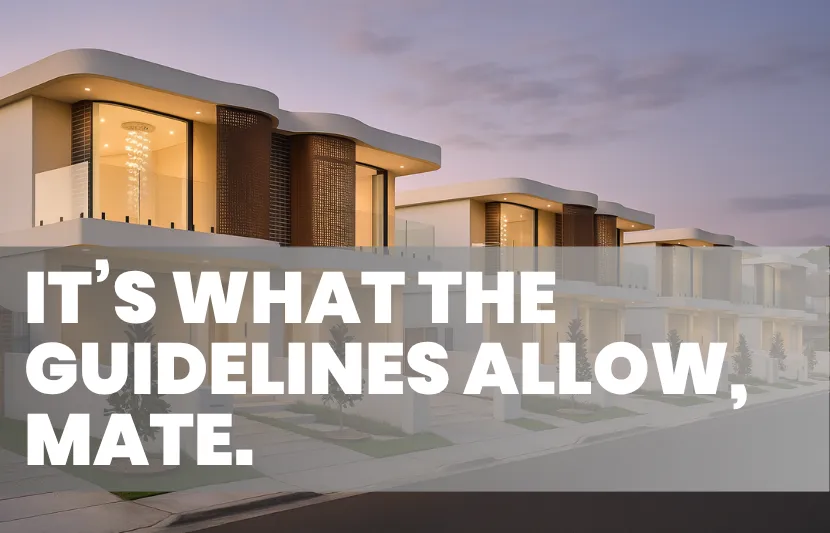
Take a drive through the outer suburbs of any Australian capital city, Sydney, Melbourne, Brisbane, it doesn’t matter, and chances are you’ll pass a parade of near identical houses. One after the other. Rendered in muted greys, white exterior walls, beige bricks, narrow lots, same driveway, same awkward balcony above the front door that no one will ever use. And then there’s the duplexes, don’t even get us started.
It’s as if a mass case of architectural déjà vu has gripped Australia’s cities. New developments, once a place of aspiration, are starting to look less like vibrant communities and more like Stepford suburbs. Safe. Efficient. And frankly, a little soul-sapping.
But before we get too cynical, let’s unpack why this is happening, and more importantly, what you can do if you’re a buyer or builder who wants something different without blowing the budget or fighting with council for six months.
First, Let’s Talk About Why Everything Looks the Same
There’s actually a lot going on under the surface, and not all of it is as dystopian as it seems.
1. Standardisation Saves Time and Money
Developers aren’t picking the same six designs out of laziness (well, not only). There’s a method to the monotony. Building the same home over and over again helps:
- Minimise costs through bulk material purchasing
- Speed up approvals (fewer design rejections by council)
- Streamline tradie workflows (bricklayer knows the drill, literally)
- Reduce buyer decision fatigue (less choice = quicker sale)
It’s a fast-food version of housing, predictable, affordable, and easy to mass-produce. But just like fast food, it lacks character.
2. Council Rules and Codes Can Be a Creativity Killer
Australian planning laws vary by state and council, but one thing they share is a love of guidelines. From minimum setbacks and maximum heights to rules governing façade treatments and garage placements, many designs are constrained from the outset.
Some councils offer pattern book, pre-approved home designs that fast-track approval. Great for efficiency. Terrible for individuality.
3. The Rise of the House & Land Package
Buyers are often lured in by shiny brochures promising “custom” designs. In reality, most house & land packages offer minor tweaks on fixed templates.
Worse, some developments even restrict you to a narrow list of builders or façades to ensure “street harmony.” You know what else has harmony? A row of cubicles.
4. Density Demands and Tiny Lots
With urban sprawl under pressure and affordability a national issue, we’re seeing narrower blocks and smaller homes squeezed together. Think six metres wide, three bedrooms up top, a sliver of courtyard out back. Not much room to get creative, literally.
5. Risk Aversion in the Age of Resale
Let’s be honest, most people don’t build a forever home anymore. Buyers often play it safe, sticking to neutral tones and popular designs in case they need to flip it in a few years. Bold design is often seen as a resale liability, not a feature.
So… Is It Hopeless?
Not at all.
If you’re about to buy a home, or a block of land, and you don’t want to be just another beige box in the burbs, there are ways to bring originality back into the mix. You just need to know where to push and where to play by the rules.
Let’s break it down.
How to Build Something Different (Without Going Broke or Mad)
1. Choose Your Land Wisely
The shape, size, and location of your lot will influence everything.
- Corner blocks offer more design flexibility and frontage.
- Wider lots allow you to break the narrow-box trend.
- Avoid estates with strict covenants that limit design choices or mandate a “unified streetscape.”
- Check local DCPs (Development Control Plans) before you buy. They can dictate materials, roof pitch, setbacks, even fence design.
Pro tip: Titlespace can flag any restrictive covenants or planning overlays before you commit to a contract. Don’t get boxed in before you even start.
2. Find a Builder Who Actually Listens
Not all builders are created equal. Some will happily tweak their base plans to suit your vision. Others will charge you for moving a tap.
Ask these questions early:
- How customisable are your designs?
- Can I bring my own plans or architect?
- Do you allow third-party suppliers (for things like windows or cladding)?
- Can I speak directly with your design team?
If the answer to any of those is “No,” keep looking.
3. Work With an Architect or Building Designer (Even Just for the Concept)
You don’t need to commission a grand design. But even a few hours with an architect or building designer can help you develop a concept that reflects you, not just the market trends.
Once you’ve got a clear direction, you can often hand it off to a builder to bring to life in a cost-effective way. Think of it as creating your own recipe before hiring the chef.
4. Design with Personality, Not Just Price
You can do a lot without changing the structural footprint:
- Façade treatments: Mix cladding materials like timber, brick, Colorbond, or render.
- Colour palettes: Dare to go beyond greige.
- Windows: Vary size and placement to create rhythm and light.
- Landscaping: Plant choices, fencing, and outdoor zones can add soul to your home without requiring structural changes.
None of these should blow your budget, but they can significantly change the vibe.
5. Fight for the Floor Plan That Works for You
Most stock designs still assume a nuclear family and two cars in the garage. But your needs might be different:
- Work from home? Prioritise a front-facing office with light.
- Multi-generational family? Add a downstairs guest suite.
- Hate unused formal living rooms? Scrap it for a bigger kitchen or media room.
You’re the one living there. Make it work for your life, not a developer’s spreadsheet.
Navigating the Red Tape (Without Losing It)
We get it. No one wants to be stuck in a 9-month DA battle because they dared to dream of a balcony. That’s why we always recommend working with people who know the system.
- Planning consultants can help you push the boundaries (legally) if your council is being tricky.
- Your conveyancer (that’s us) can help you review the contract before you buy land to check for deal-breakers.
- Architects and designers can often design within code constraints while still delivering originality.
In short: Don’t assume rules = boring. It just means you need to get clever.
Titlespace’s Take
At Titlespace, we’re not architects, builders, or interior designers. But we are the ones who help buyers avoid nasty surprises buried in property contracts, estate covenants, and planning restrictions.
Because here’s the thing: the dream of building something unique can quickly turn into a compliance headache if you don’t know what’s allowed, or what you’ve unknowingly signed up for.
That’s why we believe conveyancing should do more than tick legal boxes. It should protect your vision.
At Titlespace, we:
- Review your contract before you buy (so you know what you’re really getting)
- Flag covenants, or sneaky clauses early
- Work with your team to keep things moving
- Operate fully online-fast, streamlined, no paper chase
We’re licensed across NSW, VIC, and QLD, and built for a new generation of buyers, ones who want clarity, speed, and a bit more personality in their home and their legal team.
If you’re about to buy land or build a home and want a legal team that’s as future-focused as your floorplan, we’re here for it.
Not Sure What You’ll Need?
Totally fair. Buying property isn’t one-size-fits-all.
That’s why we offer a free 20-minute property session with one of our legal experts. No strings attached.
Skip the guesswork. Get legal clarity before you plug in.
The content of this blog post is intended as general information and should be considered broad guidance only. It does not constitute legal, financial, or tax advice and should not be relied upon as such. Every property transaction is different, and we recommend seeking personalised advice from a qualified professional before making any investment or legal decisions.
FAQs that we get. Alot.
Can I customise my house in a new estate or house & land package?
It depends. Many estates come with restrictive covenants that limit your choices. That’s why it’s critical to have your contract reviewed before you buy, so you know exactly what’s allowed and what isn’t.Yes, but it usually requires strata approval and a formal by-law, especially if the installation affects common property.
What are covenants, and how can they affect my home design?
Covenants are legal restrictions placed on the use of land, often by developers or councils to maintain a certain “look and feel” in an area. They can limit your choice of builder, dictate façade design, or restrict additions like sheds, fences, and even solar panels.
Can Titlespace help me identify restrictions before I sign a contract?
Absolutely. Our pre-purchase contract review service flags potential issues like restrictive covenants and easements. We’ll let you know if your dream design might hit a legal wall before you commit.
Are house & land packages legally different from buying an established home?
Yes. With house & land packages, you’re often entering into two separate contracts: one for the land and one for the build. It’s crucial to understand the fine print in both, especially where design flexibility, pricing variations, and build timelines are concerned.
What should I look out for in a land contract before building?
Look for easements, setbacks, zoning, covenants, and minimum floor area requirements. Also, check for deadlines to start or finish construction, as some contracts impose penalties if you don’t build within a certain timeframe.
I want to build something unique, but I'm on a budget. Any advice?
Design smart. You don’t need to blow the budget to make a lasting impression. Small changes, such as varied cladding, creative landscaping, or clever use of light, can make a big difference. And most importantly, get legal advice upfront to avoid costly surprises down the track.